
Homes in Romsey, Andover and across Test Valley can put small electricals, vapes and batteries out with their bins from 25 January 2027. Checked November 2026.
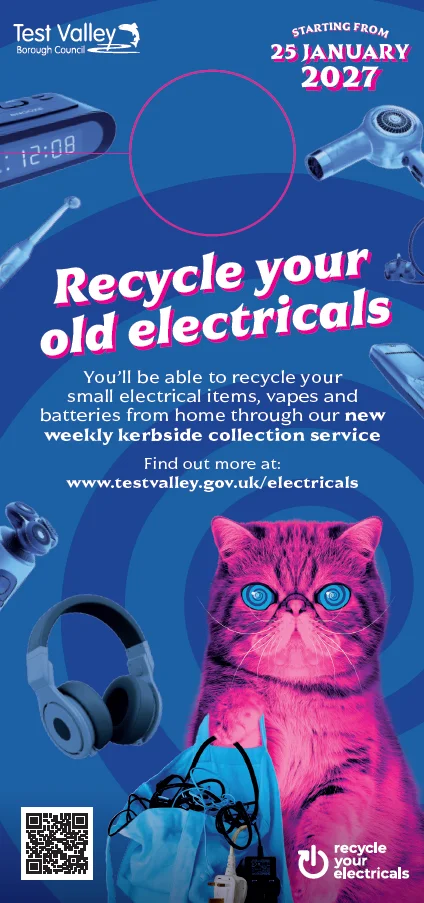
From Monday 25 January 2027, households in Romsey, Andover and the rest of Test Valley will be able to leave small electrical items, batteries and vapes on their bin for collection. Test Valley Borough Council’s cabinet approved the free weekly service on Wednesday 4 November, the council said.
It starts with around 55,000 homes. Flats and houses that share bins in a bin store will join in a later phase.
What the council approved
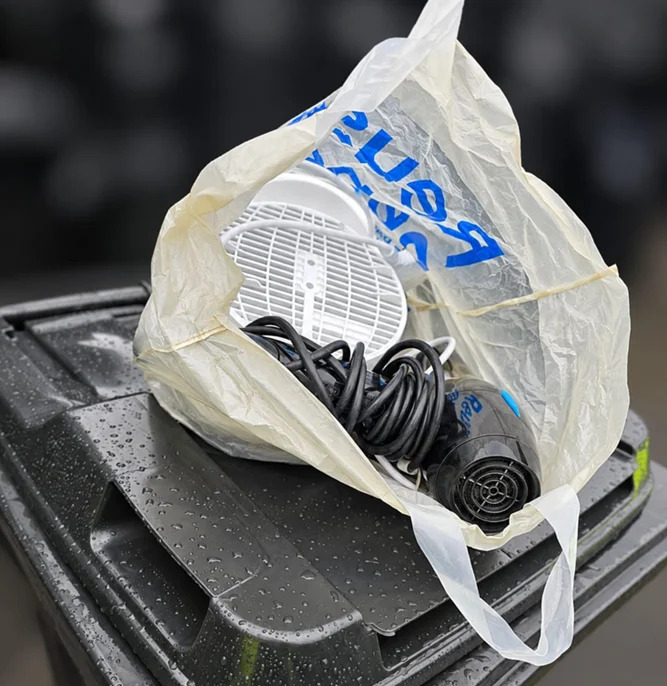
Households will put the items out in plastic bags alongside their household waste or recycling bins, and the crews will collect them separately and send them for treatment and recycling, the council said. Its service page, updated on 5 November, says collections will happen every week on each home’s usual bin day, and that there is no charge because it is part of the existing household collection service.
The council gives two reasons. Batteries and vapes can catch fire when they are damaged or crushed in the bin lorry or at the waste plant, so taking them out of the general bins protects crews and facilities. And collecting them separately lets valuable materials be recovered: the council says the electrical items are dismantled so that copper, aluminium, steel and plastics can be reused.
Councillor David Drew, the council’s portfolio holder for recycling and environmental services, said: “We know that many people want to do the right thing with unwanted electrical items, batteries and vapes, but they are not always easy to recycle.
“This new service will make recycling these everyday items much simpler by allowing residents to leave them out on their collection day.
“As well as giving people another convenient way to recycle, the scheme will help reduce the fire risk caused by batteries and vapes entering the waste stream and ensure more valuable materials are recovered for reuse.”
What you can put out
The council’s frequently asked questions give these as examples, and say a full list will be published closer to the launch:
- kitchen appliances such as toasters, kettles, food blenders and coffee machines
- irons, fans, radios, clocks and DVD players
- shavers, electric toothbrushes, hair dryers and straighteners
- small electrical DIY tools
- cameras, mini hi-fis and cassette players
- games consoles and laptops
- wires, plugs and chargers
- disposable and reusable vapes
- household batteries: AA, AAA, C, D, 6V, 9V and button batteries
What it will not take
TVs, monitors, microwave ovens, vacuum cleaners, dishwashers, washing machines, fridges, freezers and other bulky appliances are out, and so is anything taken apart. Batteries from children’s ride-on toys, car batteries, industrial batteries and sealed lead acid or gel batteries are also excluded; the council says these must never go in the brown or black bins and should go to a Household Waste Recycling Centre.
The simple test, in the council’s words: if an item “doesn’t fit in a standard sized carrier bag, then it will be too large to fit into the compartment on our waste collection vehicle”. Larger items can go to a recycling centre or through the council’s bulky waste collection.
How to put them out
The council’s instructions are specific, and a bag set out the wrong way will be left behind with a sticker explaining why:
- Small electricals: in a standard sized carrier bag, not tied.
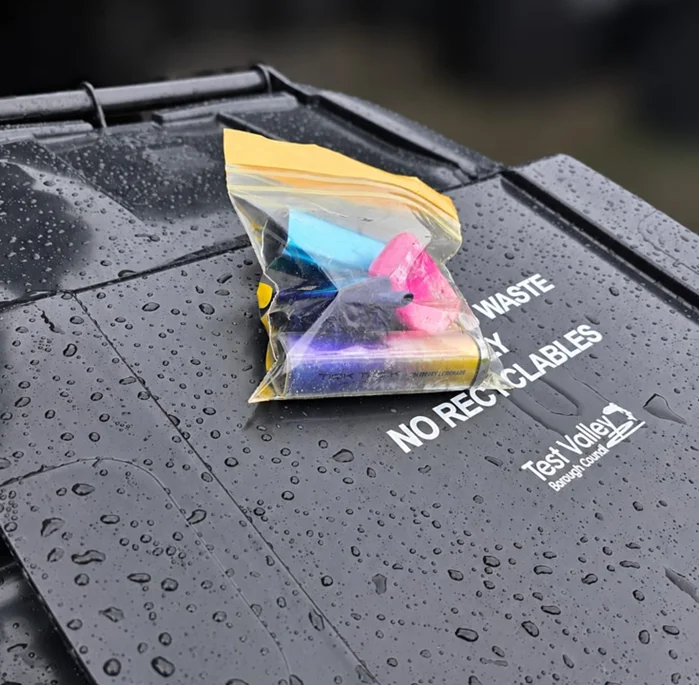
- Vapes: in a sealed clear sandwich bag.
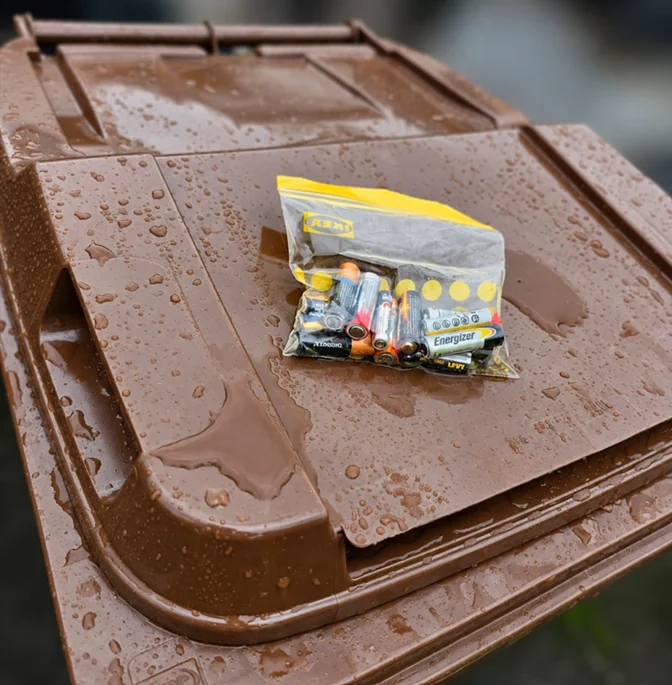
- Batteries: in a separate sealed clear sandwich bag.
- Do not mix them, and do not put the vape or battery bags inside the carrier bag.
- Put your bin at the edge of your property by 7am, with the bags on top of the lid.
- One carrier bag of small electricals per home per week. If you have more, put them out over several weeks or take them to a recycling centre.
Crews will not come back for a missed collection; put the items out again on your next bin day. The service is for households only, not businesses. The council also advises deleting personal data from phones, laptops and cameras before they go out, and suggests giving working items to a charity first.
Shared bins come later
Homes that use large four-wheeled communal bins, usually in bin stores, are not part of the launch. The council says it is trialling different ways of making the service work for these properties and will contact residents directly when it reaches their home.
Glass and plastics still to come
The new collection follows weekly food waste collections, which Test Valley introduced in October 2025. On its service page the council also answers why it has not yet added glass and more plastics to kerbside recycling: its 2022 plans were overtaken by the Government’s Simpler Recycling policy, and it is now waiting for a new £50.5 million recycling facility for Hampshire, being built in Eastleigh and expected to open in mid-2028.
What it means for you
If you live in Test Valley, which includes Romsey and Andover, you can start clearing the drawer of dead chargers and old vapes on your first bin day from Monday 25 January 2027. Check your bin day now, and keep a sandwich bag each for batteries and vapes.
Homes in Winchester district are served by Winchester City Council rather than Test Valley, so this service does not cover them; our Winchester bin collection days page sets out what the city council collects.
More information: testvalley.gov.uk/electricals.
Have your say