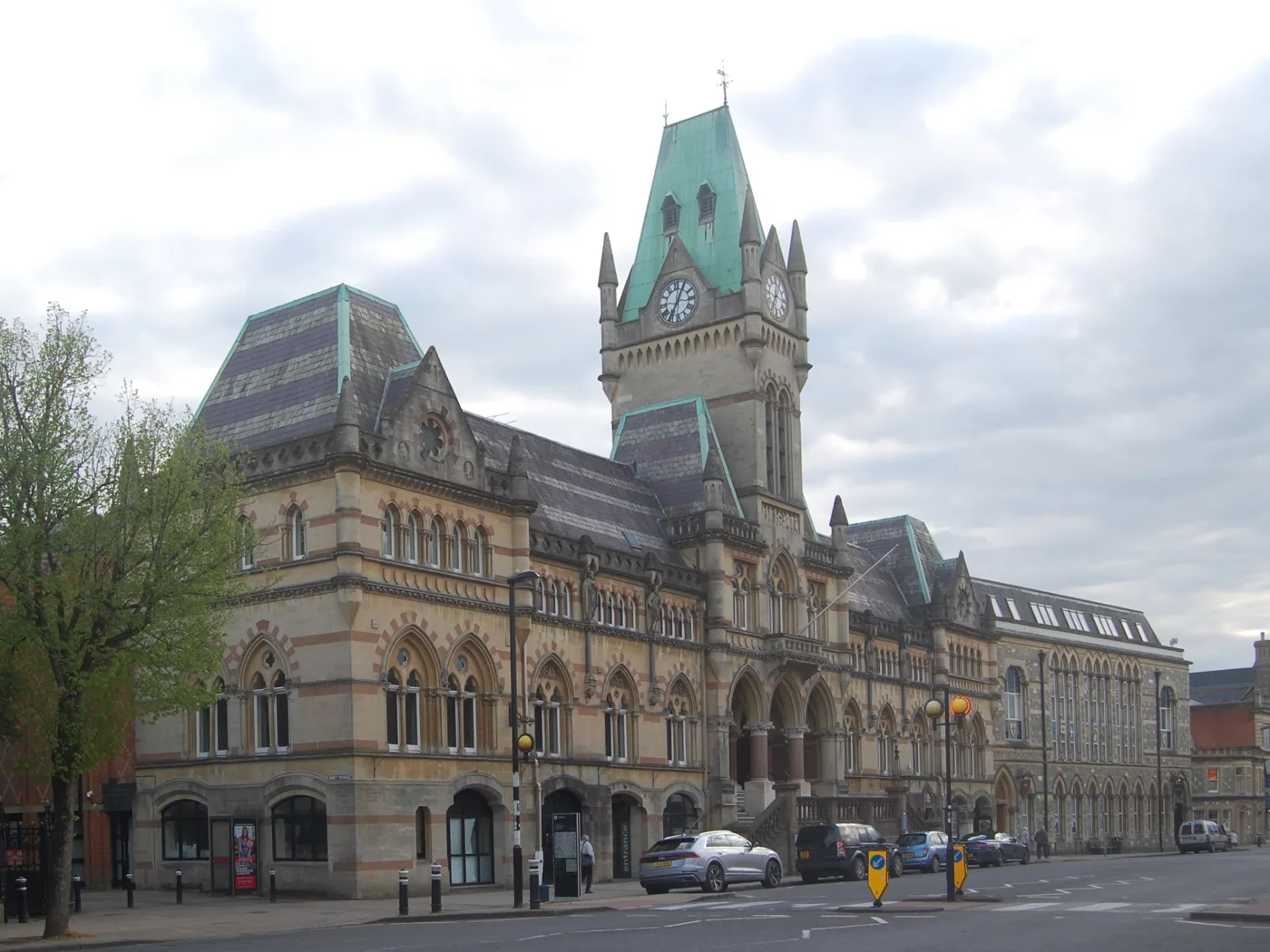

Winchester Guildhall closes for 14 months from March 2027 for £5m of repairs, and Cabinet has approved leasing it and Abbey House to an outside operator.
Winchester Guildhall will close to the public for 14 months from March 2027 while £5m of repairs are carried out, and when it reopens it is likely to be run by a private events company rather than the city council. Cabinet decided on 21 July to put the Guildhall and Abbey House on the market for an occupational lease, as a pair and as separate lots. The decision took effect on 29 July after the call-in period expired, and marketing was due to begin the day before, on 28 July.
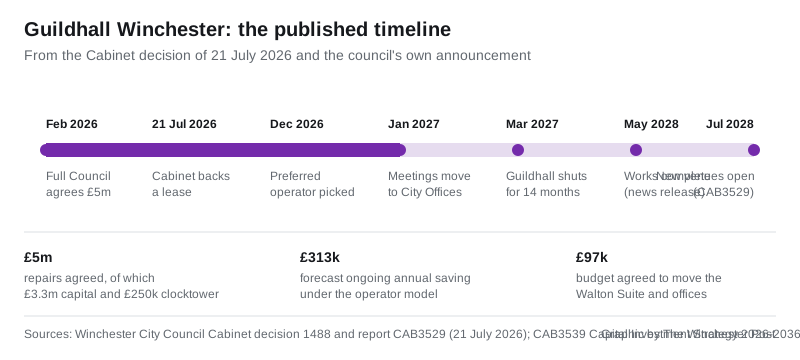
The report behind that decision, CAB3529, sets out figures the council’s public announcement does not. It says a letting to a specialist operator could generate net income of more than £500,000 over the first ten years, on top of savings against what the two buildings cost to run now. Annual savings are forecast at just over £300,000, which the report totals with the projected lease income to reach “almost £3.7m over 10 years”. A summary table in the report puts the arithmetic more plainly: £603,000 of annual revenue expenditure saved, less £250,000 of lost income and £40,000 for the city office space the displaced services will take up, giving ongoing annual savings of £313,000.
What the £5m buys
The repair money was agreed separately, in February, when Full Council approved the Capital Investment Strategy 2026 to 2036. That document splits the spend: £3,300,000 of capital improvements to the Guildhall across 2026/27 and 2027/28, and £250,000 for the clocktower in 2026/27. It records that a condition survey “has indicated that works of up to £5m are required to the Guildhall of which an estimated £3.3m are capital”, and that the work will “address the quality of some utilities so that letting potential is improved”. The clocktower budget is not cosmetic either: the strategy says those works “will improve the fire safety of the building whilst also improving thermal comfort”.
The council’s own announcement lists the works as roof, stonework and window repairs, internal and external redecoration and new flooring, on a building completed in 1873.
What closes, what stays open
The Guildhall closes to the public from March 2027 until May 2028. The council says Winchester School of Art’s West Wing campus and Shoal will keep operating throughout, and that the Visitor Information Centre will stay open, though it may shut temporarily where construction makes that necessary for safety.
Public council meetings currently held in the Walton Suite move to the City Offices on Colebrook Street from January 2027. Cabinet agreed a £97,000 budget for that relocation and other one-off costs. The council will also save an estimated £250,000 during the closure itself, largely because the maintenance budget is not needed while the building is shut.
There is a longer-term question the report leaves open. The proposed lease covers the Visitor Information Centre’s space, the unit Shoal leases, the main event space, the meeting rooms Democratic Services uses for Cabinet and committee meetings, and some ground floor space the council uses for goods-in and its print room. On the Visitor Information Centre, CAB3529 says plainly that “no decisions have been made” about its future arrangements, and that a temporary relocation during the works would cost about £20,000. Staff are affected too: the report says the impact on employees will need to be considered before closure, under the council’s Managing Workforce Change policy.
Why the council wants out of running it
The report is candid that direct management has not worked. Running the venues as bare rooms without catering or event support, the current model, “does not optimise use of the assets”. The fully serviced model the council used before the pandemic required 23 staff. Neither, it says, “proved to generate a profit for the Council”.
Soft market testing by the council’s advisers, Blue Horizon, found interest from specialist venue operators. Stakeholders consulted during that exercise described the Guildhall as an iconic landmark but “more of a ‘monument’ than an active contributor”, and listed outdated AV and IT, inflexible layouts, high running costs, poor accessibility and acoustics, and high charges for community use.
Any lease will have to run at least 20 years to attract an operator, the report says. The council keeps the freehold, and the lease will carry a user clause so that certain civic events can still take place at the Guildhall. Cllr Lucille Thompson, Cabinet Member for Culture, said finding “a new partner with expertise in venue management, culture and events” would give the Guildhall a strong position into the future.
The dates that matter, and one that does not agree
Operator submissions were expected from September 2026, with due diligence concluded and a preferred operator identified by December 2026. Cabinet is due to consider the operator’s submission in February 2027 and approve entering a lease, with an agreement to lease signed in March or April 2027. A further report comes back to Cabinet on the outcome of the marketing before any lease is signed.
Two published dates for the reopening do not match. The council’s news release says a new operator would manage the venue from April 2028 and that the building reopens in May 2028. CAB3529 says that “following completion of works and lease to operator beginning the new venues will open July 2028”. Neither document explains the gap, so anyone planning around a 2028 booking should treat both dates as provisional.
The report also flags that the council is aiming to complete an agreement for lease before any direction under section 24 of the local government reorganisation process, which would restrict what a council can commit to before a new unitary authority takes over.
What it means for you
If you are booking a wedding, a conference or a community event at the Guildhall, the practical cut-off is March 2027, and nothing is confirmed for the other side of the closure until the operator is chosen and the lease is signed.
If you attend or watch council meetings, the venue changes in January 2027 to the City Offices on Colebrook Street, two months before the Guildhall itself shuts.
If you use the Visitor Information Centre, it stays open during the works where it safely can, but its longer-term home is genuinely undecided and will be settled through the operator process.
Community groups that hire the Guildhall have a specific interest in the user clause in the eventual lease. The stakeholder feedback in the report singled out “high costs for community use” as an existing problem, and the council has committed to a further public report before signing.
You can follow the council’s other decisions on our Winchester planning news page, and the Guildhall’s current programme on our things to do in Winchester guide.
Have your say