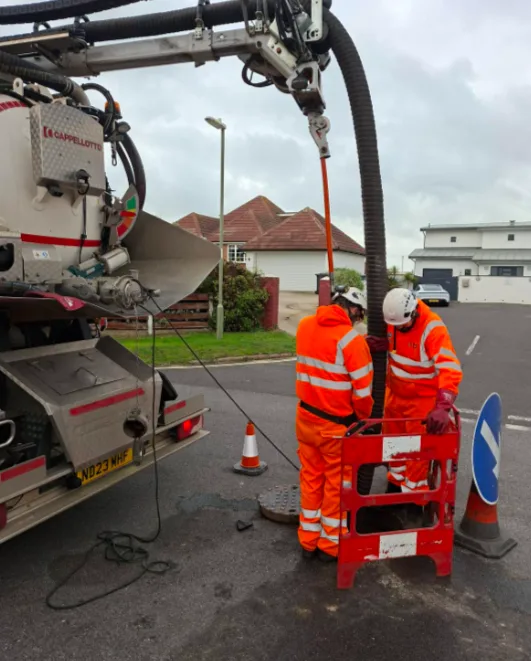

Southern Water has begun investigations in Denmead and Hambledon to keep rain out of sewers. Its £170m Portsmouth catchment scheme has stopped 117 overflows.
Denmead and Hambledon are the two Winchester district villages in a new phase of Southern Water’s £170 million programme to cut the use of storm overflows across the Portsmouth catchment. Investigations are starting there now, alongside Havant, Waterlooville, Hayling Island, Cowplain and Horndean, to find ways of keeping rainwater out of the sewers during heavy rain, Southern Water announced on 12 November.
The aim is to keep rainwater out of the wastewater network so that overflows are needed less often in heavy rain. Since 2025 the programme has helped prevent 117 storm overflows in the Portsmouth catchment, the company says, and it expects that figure to rise as the work is scaled up.
What happens next in Denmead and Hambledon
Nothing is being dug yet. This is the investigation stage, in which teams work out which combination of measures suits each village. The company says “every community and catchment presents different challenges and opportunities”. The options it is considering are:
- sustainable urban drainage systems (SuDS), which hold back or slow rainwater before it reaches a sewer
- disconnecting surface water, such as roof and driveway run-off, from the sewer network
- sealing sewers so that water cannot leak in
- optimising how the network runs
- using artificial intelligence to manage flows across the system
The programme is part of Southern Water’s wider £1.5 billion Clean Rivers and Seas Plan to reduce storm overflows over the next ten years.
Laura Moran, the programme delivery lead, said:
“This is one of the most ambitious storm overflow reduction programmes we’ve ever delivered. We’re already making strong progress across Portsmouth, and we’re now taking that momentum into surrounding communities to help create cleaner rivers, harbours and seas across the wider catchment.
“Right now we’re in the crucial investigation phase, leaving no stone unturned as we look at every part of the network to identify where we can make the biggest difference. From slowing the flow of rainwater before it reaches our sewers to harnessing new technology and nature-based solutions, we’re building a programme of improvements that can deliver lasting environmental benefits. The opportunities are huge, and we’re excited to get started.”
What the work has done in Portsmouth, Fareham and Gosport
The programme started in Portsmouth, Gosport and Fareham, where teams have been carrying out surveys, investigations and improvement works. Southern Water lists what has been completed so far:
- almost 1.5 hectares (15,000 square metres) of surface water removed from the sewers at homes and businesses, with plans for a further 15.5 hectares (155,000 square metres) through major separation schemes and SuDS
- 7,000 square metres of hard surface taken out of the system at Tesla Drive, Drayton, with 230 metres of new surface water sewer and two connections that sent rainwater into the foul sewer removed
- about 3,000 metres of sewer sealed in Port Solent and Spice Island, where tidal water was getting into the combined network
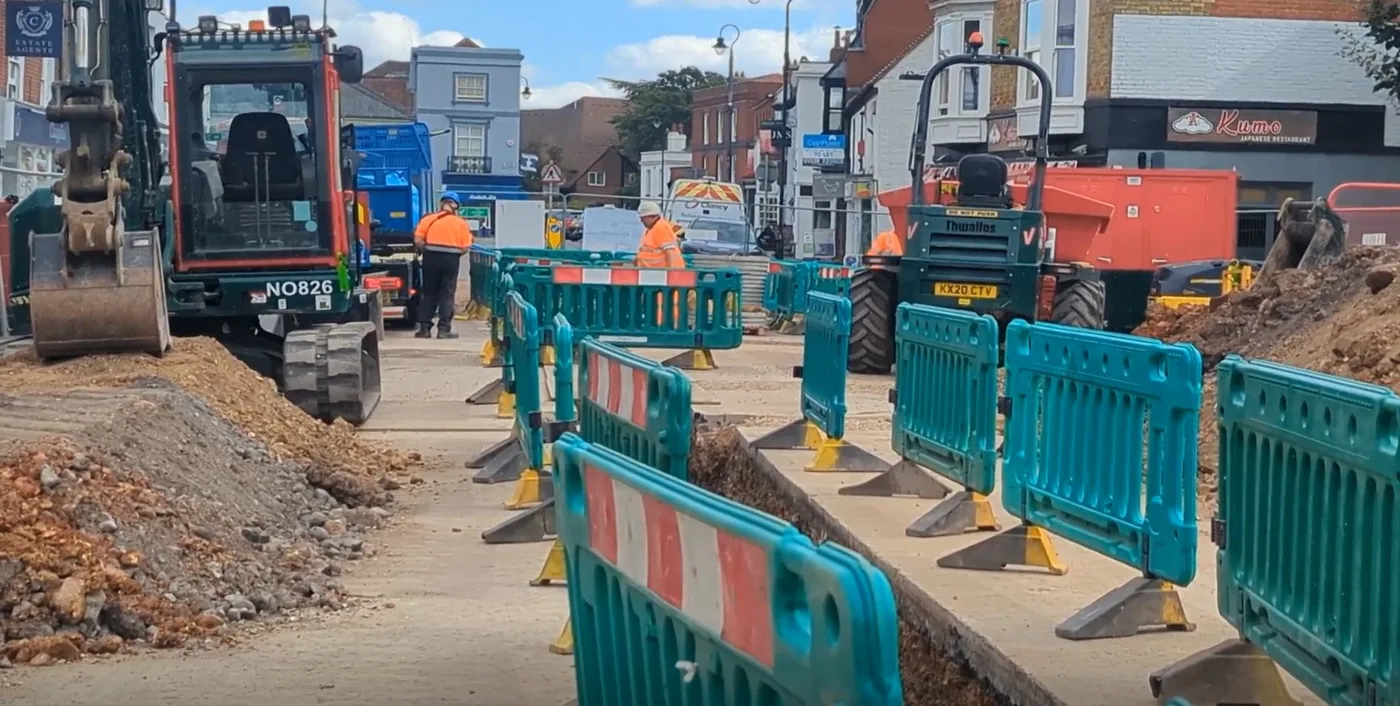
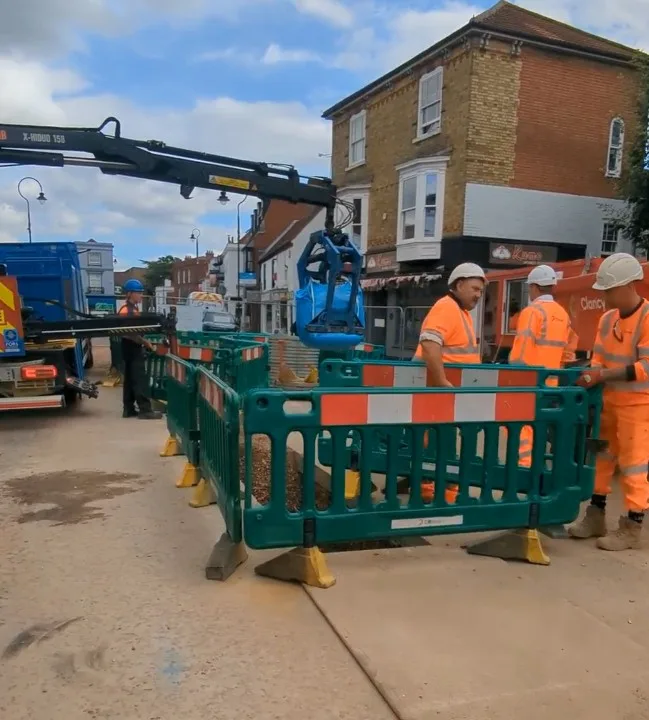
2 photos, tap one to enlarge. Photos: supplied by Southern Water
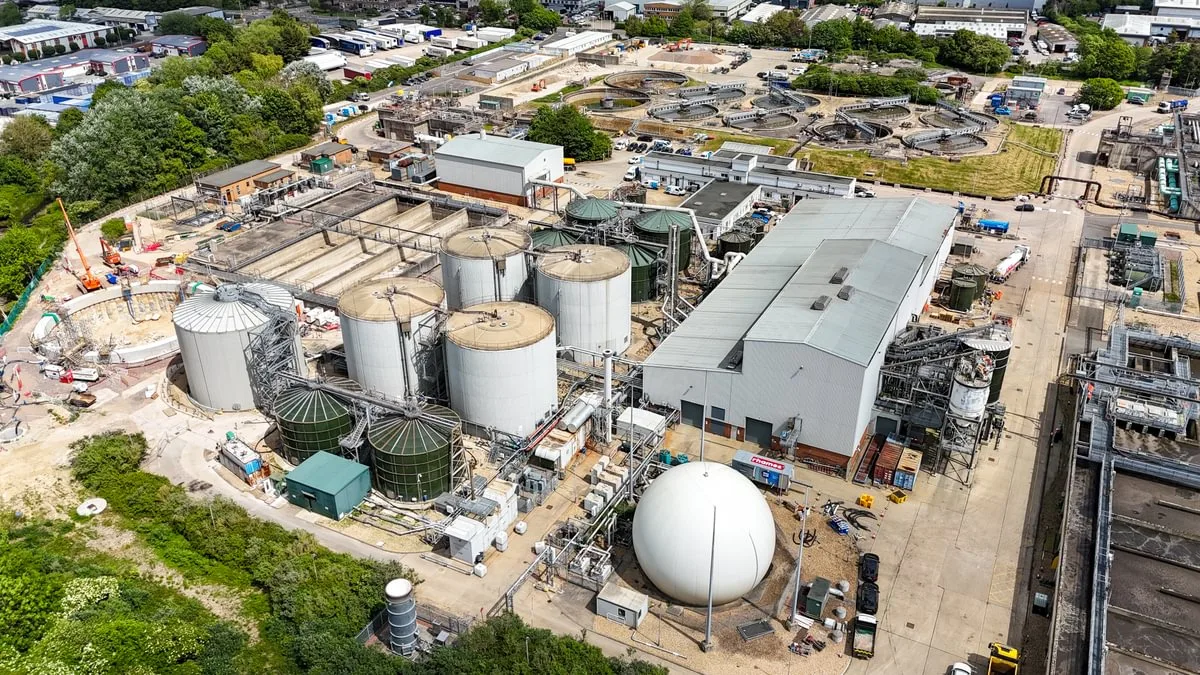
£70 million at Budds Farm
Alongside the network work, Southern Water is spending £70 million at Budds Farm Wastewater Treatment Works to improve performance and add capacity:
- a £20 million storm tank, due to be finished by spring 2027, to hold more water during heavy rain
- a £50 million upgrade starting early next year that will raise the site’s treatment capacity by more than 40 per cent, so that much more wastewater can be treated and storm overflows are used less
What it means for you
If you live in Denmead or Hambledon, you may see survey teams on the network while the investigations run. Southern Water has not yet said which measures it will use in either village or when any building work would start.
Households can help now. The company asks customers to check how their property is connected to the sewers: where rainwater from a roof or drive is running into the wastewater sewer, it says it may be able to help connect it to the correct surface water sewer instead. Questions go to Southern Water’s customer team through its website.
Have your say