
Solar panels and batteries are now on 100 Winchester council homes, out of 672 planned by 2028. The council's energy figures look like one home's, not 100.
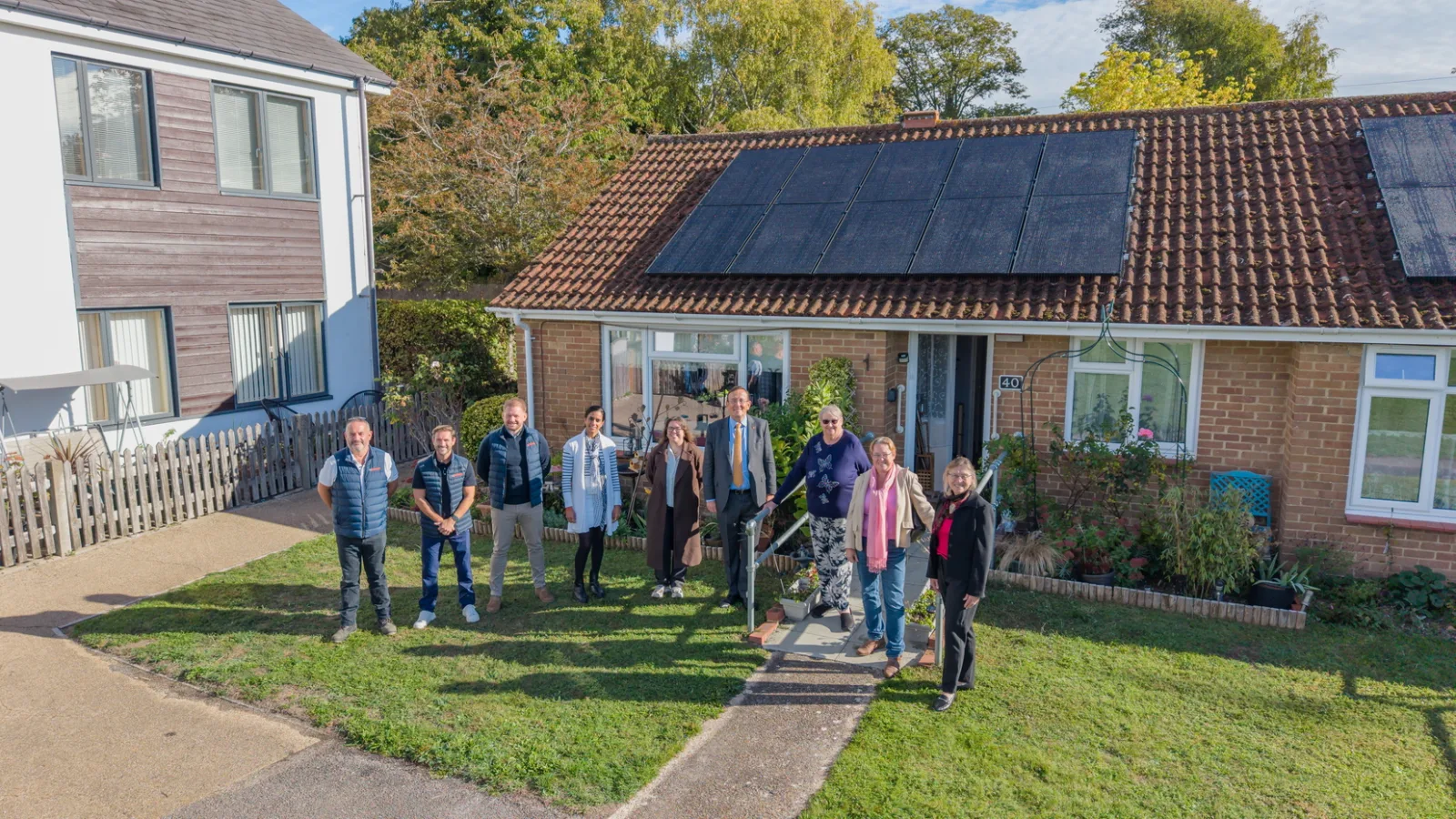
Solar panels and home batteries are now fitted to 100 Winchester City Council homes. The 100th went on a tenant’s bungalow in Alresford, about seven miles north-east of the city.
The council announced the milestone on 14 October. It says the work has taken eight months, and another 179 installations are planned “for the coming months”. The installer is UPOWA, a solar company based in Whiteley.
That still leaves the scheme well short of its full size. The council’s Cabinet report of June 2025 budgets for 672 homes to get panels and batteries between 2025 and 2028.
How far it has got
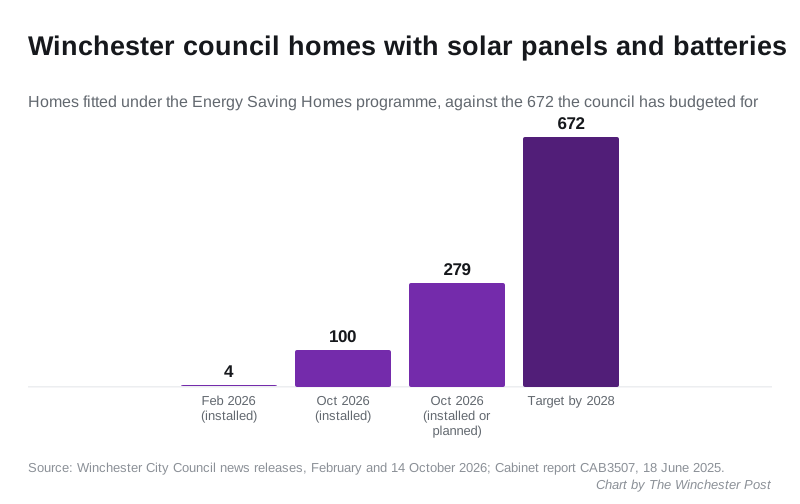
- February 2026: four homes done. The council’s first release on the scheme aimed for another 50 by spring.
- October 2026: 100 homes done, with 179 more planned. That makes 279 in total.
- Target: 672 homes by 2028, set in the Cabinet report.
Part of the bill is met by central government. In March 2025 the council was awarded £3,458,753 from the Warm Homes: Social Housing Fund, to improve 672 homes over three years. The Cabinet report puts the same grant at £3.58 million. The rest comes from the council’s housing budget, which has £38.4 million set aside for retrofit work from 2025/26 to 2030/31.
The energy figures do not add up for 100 homes
The release says the panels fitted so far will “collectively generate around 2850 kWh of electricity per year”. It also says they will cut carbon emissions by about 400kg a year.
Spread over 100 homes, that would be 28.5 kWh and 4kg of carbon per home each year. That is far below what the council itself expects from a single home. The Cabinet report gives these estimates for each home:
| Home | Panel size | Electricity a year | Bill saving a year | Carbon saved a year |
|---|---|---|---|---|
| 1 to 2 bedrooms | 2 kWp | 1,600 kWh | £346 | 265kg |
| 3 bedrooms | 4 kWp | 3,400 kWh | £547 | 434kg |
| 4 to 5 bedrooms | 4.5 kWp | 3,600 kWh | £743 | 569kg |
The release’s 2,850 kWh and 400kg sit squarely inside that per-home range. They read as the figures for one typical home, not for all 100. The release does not say which they are. If they are per home, 100 homes would make something like 285,000 kWh a year and save about 40 tonnes of carbon.
The bill figure fits the same reading. The release says tenants should save £330 a year on average after the savings are split. The Cabinet report’s table puts a single home’s saving at £346 to £743 before the split.
What tenants pay
Tenants do not get the full saving. Cabinet agreed in June 2025 that panels and batteries go only on homes whose tenant signs up to a “use and maintenance” payment. The rules are:
- the payment is half of the saving the household makes
- it starts after the system has run for twelve months
- it is based on the saving measured by an energy monitor in the home, not on an estimate made beforehand
- the council will review it every two to three years and says it will never take more than half
For a typical three-bedroom house, the report’s worked example is a saving of £10.49 a week and a charge of £5.24 a week.
The council’s own modelling says the charge will not cover the cost. Over 25 years, the financial appendix expects the 672 homes to bring in £4.884 million from the charge. Against that it sets:
- £4.011 million of running costs
- £37,000 for monitoring
- £4.056 million to replace batteries and inverters
That leaves a £3.221 million shortfall, before any panels need replacing. The report says plainly that the payment is “unlikely” to recover the ongoing costs in full, but that every pound collected reduces the cost to other tenants’ rents.
What the tenant and the council said
The 100th home belongs to Janet Cole, who also had new windows fitted this year. In the council’s release she said: “It’s nice to think, ‘oh I can do a bit of washing’, you haven’t got to stop and think ‘do I need that light on’.”
Council leader Cllr Martin Tod said 100 homes in eight months was “a brilliant achievement” and that he was “now looking to the next 100”. The council says early results show the systems meeting an average of 80% of tenants’ electricity needs.
What it means for you
- If you are a council tenant: the council says it has started with bungalows and other homes where residents are most at risk of fuel poverty. You will be told the estimated saving before you sign up, and nothing is charged for the first year.
- If you want to ask about it: the council’s housing line is 01962 848 400.
- If you plan to buy your home: the Cabinet report says the panels and inverter stay with the house under Right to Buy, and are reflected in the price. The council may take the battery out first if that is practical.
- If you rent privately or own your home: this scheme is for council homes only.
Have your say